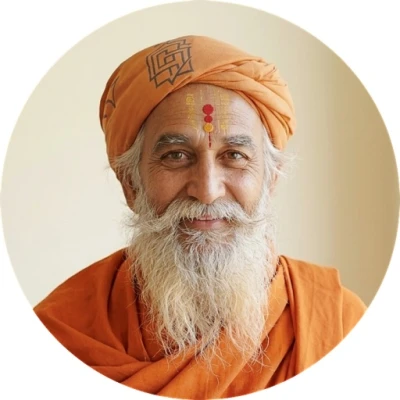
Vallabhacharya, the founder of the Pushti Marg. Every line ends madhuram - sweet - and the refrain closes each verse with madhuradhipater akhilam madhuram: everything about the Lord of sweetness is sweet.
What is the hymn doing?
Nothing but tasting. His lips are sweet, his face, his eyes, his laugh, his heart, his walk - the hymn refuses to ask for anything and simply dwells on Krishna. That is the whole method of the Pushti tradition.
When is it recited?
At Janmashtami, at the evening seva, and daily in Vaishnava homes and Pushti Marg havelis. It is sung far more often than recited, and children learn it early because of the repetition.
Is it hard to pronounce?
Among the easiest of all Sanskrit hymns - the same word ends every phrase, so the metre carries you. Read it once from the Roman text and the pattern is already familiar.
The Madhurashtakam - Vallabhacharya's eight verses celebrating the all-pervading sweetness (madhuram) of Lord Krishna.
Meaning
Every line ends with "madhuram" (sweet) - declaring Krishna's lips, face, eyes, smile, flute, hands, feet and every deed and quality to be supremely sweet.
Benefits
Recited for loving devotion (bhakti) toward Krishna; fills the mind with his beauty and sweetness and is cherished for cultivating love and joy.
The Madhurashtakam above is given in both Devanagari (Sanskrit) and Roman transliteration so you can read it in whichever script you are comfortable with - switch between the two using the buttons above, share the link, or download a PDF.
A stotram is a longer Sanskrit hymn of praise, not a forty-verse chalisa and not the lamp-song of an aarti. Browse every stotra on the Stotram index. For japa of a short formula use a mantra. The steps of worship around the recitation are in Puja Vidhi.